
The Problem With Online Feed Calculators
One of the goals of these articles is to help you learn what to look at to recognise what your horse needs, and understand that those needs will shift over time. Horses aren’t static. Their pasture changes, their workload changes, the seasons change, they age, and their nutritional requirements change right along with them.
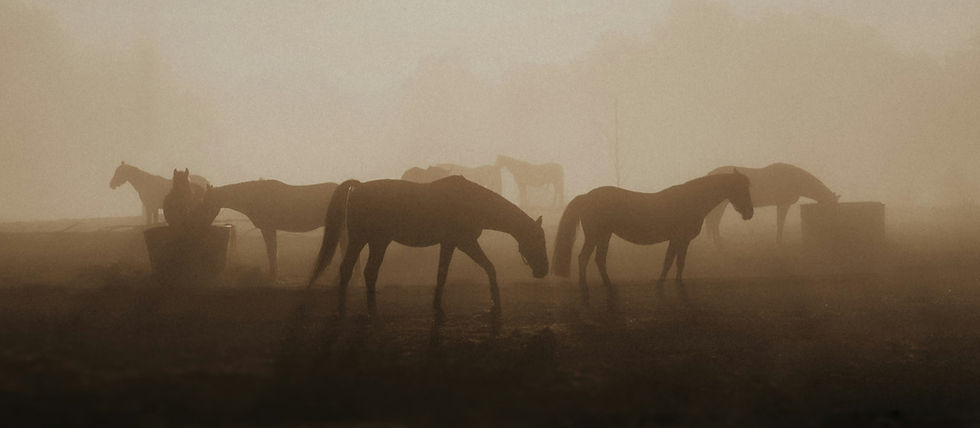
Pasture is a Wild Card
Most horses in Australia get the majority of their forage from pasture, and pasture is almost never tested for mineral content. If they are consuming around 2% of their body weight in forage every day (10+kgs), that means the biggest part of the diet is also the biggest unknown.
We can read feed labels.
We can weigh hay.
We can choose a "balancer" that claims to cover everything.
But the grass? That’s the wild card.
If you were using an online feed balancing calculator based only on hard feed and ignoring pasture, that would be like trying to balance your human diet by focusing super hard on the biscuit you had at morning tea, and ignoring everything else you ate in that day.
If we don’t know what’s in the largest part of the diet, we can’t perfectly balance minerals on paper. So instead of chasing perfect numbers, here at Sound Advice we teach owners something far more practical:
Learn the signs your horse shows when something is missing, because those signs will evolve as their environment and their circumstances change.
Why Pasture Minerals Are a Moving Target that Online Feed Calculators Miss
Pasture mineral levels shift constantly with:
rainfall
soil type
season
plant species
plant maturity
fertiliser history
grazing patterns
Two paddocks on the same property can have completely different mineral profiles. Even in the same paddock, different pasture grasses will appear at different times of the year, and these will each have their own profiles.
In order to perfectly balance your horse’s diet on paper, or using an online feed balancing calculator, you would need to test your pasture every few months, and if your horse is supplemented with hay, you would need to test each new batch of that too. That’s not practical for most horse owners. While it supplies valuable information, it's cumbersome and very time consuming.
Better for the horse itself to be your diagnostic tool.
What to Look At (and Why It Changes Over Time)
These articles are designed to help you build a mental checklist of conditions to monitor, because your horse’s body will tell you what the pasture isn’t. Ratios matter. When ratios of various minerals are out of whack, symptoms occur in a relatively predictable way.
Here are some of the key areas to watch:
Signs of Trace Mineral Imbalances
1. Coat & Skin
Sunbleaching
Dull coat
Patchy shedding
Scurfy skin
Slow wound healing
Conditions like Queensland Itch, rain rot, summer sores, greasy heel etc.
2. Hoof Quality
Long cracks
Flakey chips
Slow growth
Weak white line
What this means for your horse:
Most pastures in Australia are low in copper and zinc. This is made worse because iron is usually abundant in Australian soils, and iron competes with copper and zinc for absorption.
Further, many pelleted feeds add iron. If your horse has any of these conditions above, you need to check that you are not adding any iron in hard feeds, and compensate for deficient copper and zinc in the pasture.
All of our Trace Minerals have optimal copper and zinc. If hoof quality is a particular problem, go for our Biotin Mix. If skin conditions are a problem, go for our Skin Fix bundle, which has other ingredients that support skin health.
Signs of Macro Mineral Imbalances
3. Behaviour & Temperament
Spookiness/shying
Grumpiness, or moody behaviour
Poor tolerance to work
4. Muscle Function & Recovery
Stiffness
Soreness
Slow warm‑up
Muscle twitching
5. Bone health
Bone weakness
Poor development in a young horse
Bone abnormalities like bighead
Soft-tissue calcification (not from injury)
What this means for your horse:
Calcium, phosphorous, and magnesium are three tightly linked macro‑minerals that control bone strength, muscle and nerve function, and overall metabolic stability in horses. They don’t work in isolation - each one affects how the others are absorbed, stored, and used.
Grass profiles, workload, and stress all influence magnesium needs. Oxalate pastures (blocks calcium), and high amounts of added lucerne (potentially too much calcium) will influence the ratio of these macro minerals.
These minerals form a triad:
Bone health
Calcium + phosphorous form the mineral matrix of bone.
Magnesium helps regulate bone turnover and mineral deposition.
Muscle & nerve function
Calcium = contraction
Magnesium = relaxation
Phosphorus = energy (ATP) to power the contraction cycle
Absorption balance
Too much phosphorus → blocks calcium absorption
Too much calcium → can be tolerated if phosphorus is adequate
Magnesium deficiency → disrupts both Ca and P utilisation.
We supply magnesium in our Sound Advice Calm Mix, and we supply calcium too. Instead of supplying you with a phosphorous supplement, when phosphorous is deficient we encourage owners to feed that with rice bran, which is high in phosphorous. This may not be suitable for your horse if they have metabolic dysfunction.
You can talk to us about balancing macro minerals by contacting us at info@soundadvice.shop.
The Goal: Recognise Patterns & Adapt, Not to Chase Perfection
Your horse’s nutrition needs will never stay the same year‑round - and that’s normal.
Instead of trying to calculate perfect ratios on paper from imperfect information, we focus on what the horse is telling us:
How is their skin health?
What is their coat quality?
Are they shedding normally?
Are their hooves holding up?
Are they calm and comfortable?
Are their muscles soft and functional?
Is their coat changing in ways that make sense?
When owners learn to read these signs, they can make informed, safe and responsive adjustments to trace and macro minerals as their horses' needs evolve.
Of course, not every condition has to do with mineral imbalances. There are many chronic health issues that come from mechanical, degenerative, or genetic issues. Parasites, age, excessive workload, injury, infections, hormones, conformation, and genetic disposition also play a role.
We cover these week-by-week so you know what to look for, with links to further research. You can explore more information that will help make better decisions.
When the biggest part of the diet is unmeasured, and you have the capacity to track observations over time, your horse becomes the diagnostic tool and learning to read them is a skill that strengthens with practice.
Our Sound Advice articles will help you to recognise nutritional imbalances, chronic conditions and areas where diet will improve comfort and longevity.
Empowering owners. Providing you with only what your horse needs.


Comments